There are dates that quietly sit on a calendar, waiting for us to notice them. A due date, a wedding, the finish line of a project, an exam, or even the day a long-awaited personal goal might finally arrive.
When you’re planning something meaningful, knowing 20 weeks from today can turn a vague “sometime later” into a real point on the calendar.
For parents-to-be, dates can feel even more emotional. Pregnancy is full of little markers, and a week can suddenly feel like a whole chapter.
Someone might be counting toward a scan, watching pregnancy milestones, or simply wondering how quickly the months are moving. A future date can carry excitement, nervousness, hope, and all those feelings that don’t fit neatly inside a calendar box.
So, what date is 20 weeks from today? Using today’s date, Thursday, August 13, 2026, adding 20 weeks gives Thursday, December 31, 2026. That’s 140 days into the future.
But there is more to this calculation than simply pushing a date forward on a calendar. Understanding how the math works helps when you’re dealing with different months, leap years, time zones, or a specific date that isn’t today.
And honestly, dates have a sneaky way of becoming confusing when months start changing underneath your calculation.
| Detail | Answer |
|---|---|
| Today’s Date | August 14, 2026 |
| 20 Weeks | 140 days |
| Date 20 Weeks From Today | December 15, 2026 |
| Day | Tuesday |
| Calculation | August 14, 2026 + 140 days |
| Result | Tuesday, December 15, 2026 |
What Is 20 Weeks From Today?

If you’re asking what is 20 weeks from today, the simplest answer is:
Today: Thursday, August 13, 2026
20 weeks: 140 days
Future date: Thursday, December 31, 2026
The key fact is that 1 week = 7 days, so 20 weeks = 140 days. Once you know that, the calculation becomes much easier to understand.
You can think of 20 weeks from now as moving forward through the calendar in twenty seven-day jumps. Every jump lands on the same weekday.
Since August 13, 2026, is a Thursday, twenty weeks later is also a Thursday. That’s a handy little check if you’re doing the calculation by hand.
If you’re using a 20 Weeks From Today Calculator, you generally only need to enter the current date or today’s date. The calculator then adds 140 days and gives you the resulting exact date.
For August 13, 2026, the answer is December 31, 2026.
20 Weeks From Today Calculator: How It Works
A 20 Weeks From Today Calculator is basically doing calendar arithmetic for you. There isn’t any mysterious time-travel machinery hiding behind the screen, sadly. It simply converts weeks into days and adds those days to your starting date.
The basic formula is:
20 weeks × 7 days = 140 days
Then:
Starting date + 140 days = exact future date
For today’s calculation:
August 13, 2026 + 140 days = December 31, 2026
This is useful because manually counting days across several months can become irritating pretty quickly. August has 31 days, September has 30, October has 31, November has 30, and December has 31. Your brain may be perfectly capable of handling it, but it probably has better things to do.
A good date calculator also reduces mistakes caused by different month lengths, leap years, or accidentally counting the starting day twice.
How to Calculate 20 Weeks From Today by Hand
You don’t actually need a calculator if you want to calculate 20 weeks yourself.
Start with the basic conversion:
20 weeks = 140 days
Now add 140 days to the starting date.
Starting from August 13, 2026:
- August 13 to August 31 leaves 18 days after the starting date.
- September contains 30 days.
- October contains 31 days.
- November contains 30 days.
- December supplies the remaining days.
When the totals are combined, the final date lands on December 31, 2026.
Another easy method is to count weekly increments rather than individual days. Move ahead one week at a time:
August 20, August 27, September 3, September 10, and so on.
After twenty weekly jumps, you arrive at December 31.
This approach is especially useful when you need to calculate 20 weeks from a specific date. You can simply keep adding seven days each time. It feels slower, but it gives you a surprisingly satisfying sense of where the date is actually going.
Is 20 Weeks the Same as 5 Months?
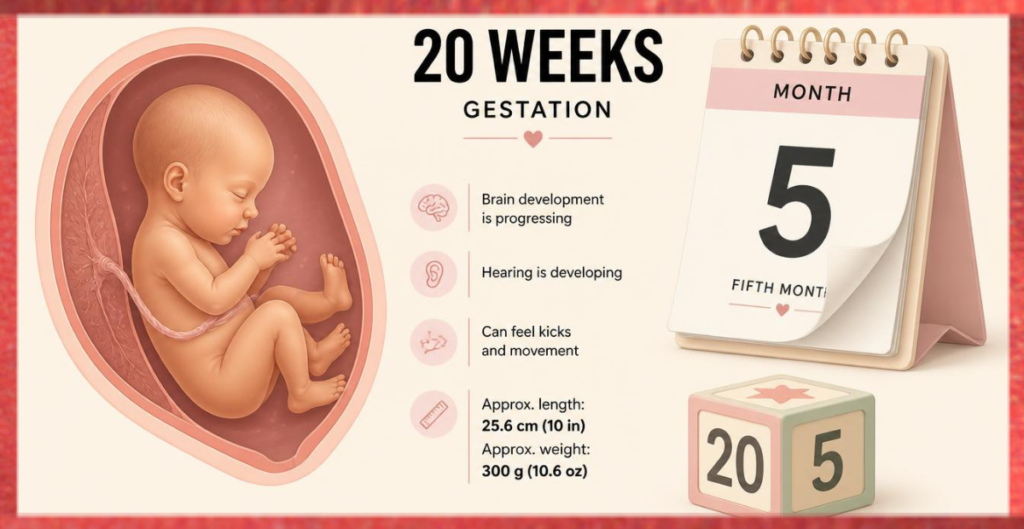
This question causes more confusion than it deserves.
Technically, 20 weeks is not exactly 5 calendar months.
Because 20 weeks = 140 days, the number of calendar months represented by those 140 days depends on which months you’re moving through. Calendar months don’t all contain the same number of days.
On average, a month is roughly 4.33 weeks, so 20 weeks is around 4.6 calendar months. That’s why people often casually describe 20 weeks as approximately 4.5 months or nearly 5 months.
So if you’re asking, is 20 weeks 5 months, the practical answer is: approximately, but not exactly.
There aren’t always 20 weeks in 5 months because five calendar months can contain around 150–153 days, depending on the months involved. A calendar doesn’t behave like a perfectly divided ruler. It has its own slightly messy personality.
20 Weeks in Days: The Simple Conversion
If you search 20 weeks in days, the answer is straightforward:
20 weeks = 140 days
That’s because:
20 × 7 = 140
This also means that 140 days from today and 20 weeks from today describe the same amount of time, provided you’re using the same starting point and ordinary calendar-day calculation.
So these searches all essentially ask the same thing:
- what date is 140 days from today
- exact date 140 days from today
- 20 weeks from today date
- 20 weeks in days
- how many days is 20 weeks
- calculate 20 weeks
For today’s date, all of them lead to December 31, 2026.
Why 20 Weeks Matters During Pregnancy
For someone tracking pregnancy 20 weeks, the number can have particular emotional weight. A typical pregnancy is often discussed as a 40-week pregnancy, making week 20 approximately the halfway point.
That doesn’t mean every pregnancy follows the calendar perfectly, of course. Pregnancy dating is based on medical conventions and individual circumstances, so important decisions should always be discussed with a qualified healthcare professional.
Still, the phrase 20 weeks pregnant has become a familiar milestone for many expecting parents. It can represent a feeling of being halfway through pregnancy, even though the experience itself rarely feels like a neat mathematical 50 percent.
A parent may mark the date with a photograph, write a note to the baby, attend an appointment, or simply sit quietly for a moment and think, “We’re really getting closer.”
And when the baby is a girl, families may attach even more personal meaning to the moment. A grandmother might begin thinking about tiny dresses, a sibling may start imagining a baby sister, and parents may suddenly realize that the little person they’ve been talking about is becoming more real with every passing week.
The calendar can’t capture all of that emotion, but it can give the emotion a date.
20 Weeks From Today for Project Deadlines

Not every important date involves pregnancy. Sometimes the future date on your calendar belongs to a project deadline.
Suppose you begin a long business project on August 13 and have a twenty-week planning horizon. December 31 gives you a concrete endpoint for reviewing progress, completing milestones, or preparing the next stage.
This can be useful for:
- project timelines
- work projects
- quarterly goals
- long-term assignments
- business launches
- personal development projects
A twenty-week period is long enough to make meaningful progress but short enough that the finish line doesn’t feel like it belongs to another lifetime.
Breaking those 20 weeks into smaller sections can help too. You could divide the period into four five-week phases, ten two-week sprints, or weekly targets. Suddenly, 140 days stops looking like a giant block of time and starts looking manageable.
Using 20 Weeks for Academic Planning
Students can also use 20 weeks from today to organize their academic calendars.
If your semester, certification program, or study plan stretches across several months, knowing the exact future date can help you work backward from the deadline.
For example, if an exam date falls around the end of a twenty-week period, you might reserve:
- the first few weeks for learning,
- the middle weeks for practice,
- several weeks for revision,
- and the final days for mock tests and review.
This is where an academic date planning approach becomes more useful than simply knowing the final date. The date tells you where you’re going; the weekly structure tells you how to get there without panicking three days before the exam.
20 Weeks From Today for Personal Goals
Twenty weeks is also a fascinating period for personal goals.
Maybe you’re working toward a fitness goal timeline, starting a creative project, building a habit, or planning a financial savings plan. Twenty weeks provides enough breathing room to make gradual progress.
For fitness, you could create a fitness challenge with weekly targets rather than expecting dramatic changes overnight.
For money, you could turn the period into a savings goal timeline. If your target is $1,000, for example, dividing the goal across twenty weeks gives you a simple weekly benchmark of $50.
The point isn’t that every goal magically becomes easier because you’ve attached it to a date. It’s that a defined period gives your effort somewhere to land.
How to Calculate 20 Weeks Across Different Months
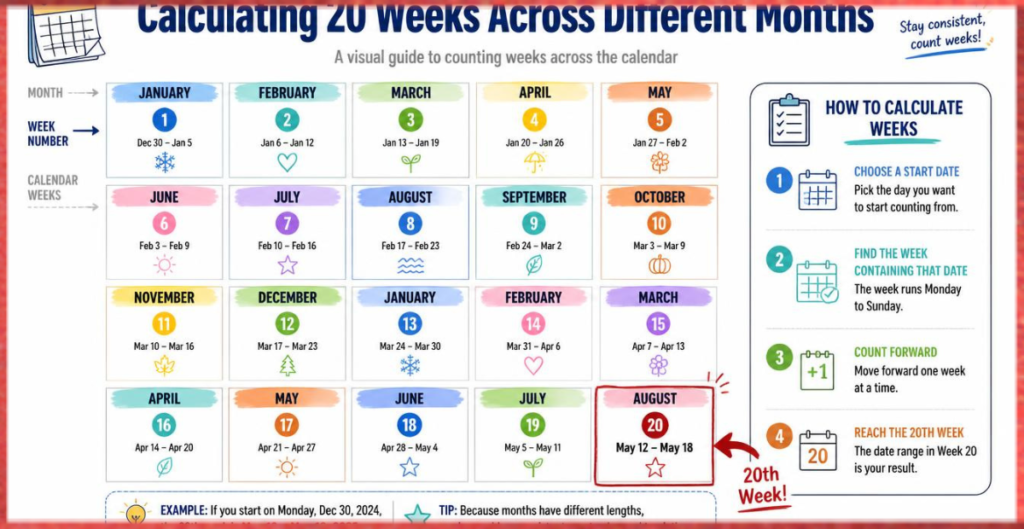
The easiest way to calculate 20 weeks across different months is to avoid assuming every month has the same number of days.
Use the week-to-day conversion:
20 weeks = 140 days
Then add 140 days to the starting date.
If you’re doing a manual month length calculation, remember:
- January has 31 days
- February has 28 days in a normal year
- February has 29 days during a leap year
- April, June, September, and November have 30 days
- The remaining months have 31 days
This matters particularly when a calculation crosses February.
A leap year date calculation can produce a different result if your 20-week period passes through February 29. For example, adding 140 days to a date in a leap year isn’t necessarily the same as adding it to the corresponding date in a non-leap year.
The number of weeks stays fixed. The calendar environment changes around it.
Does 20 Weeks From Today Include Today?
Usually, when people ask does 20 weeks from today include today, the standard interpretation is that today is the starting point and the calculation moves forward 140 days.
Today itself is not treated as day one of the 140-day addition.
This distinction sounds tiny, but it can create a one-day difference if someone is manually counting. That’s why a reliable date calculator generally follows a consistent convention rather than casually counting the starting date twice.
If you’re calculating an official deadline, appointment, contract period, or other important date, check the rules governing that particular situation because inclusive and exclusive counting can sometimes be defined differently.
What About 20 Weeks Ago From Today?
The same method works backward.
To find 20 weeks ago from today, subtract 140 days instead of adding them.
So the formula becomes:
Today 140 days = past date
This is useful when you’re trying to find a date 20 weeks ago, reconstruct an old project timeline, review a fitness period, or understand when a previous event occurred.
The same rule applies:
20 weeks = 140 days
The direction changes, but the amount of time doesn’t.
Time Zones and the International Date Line
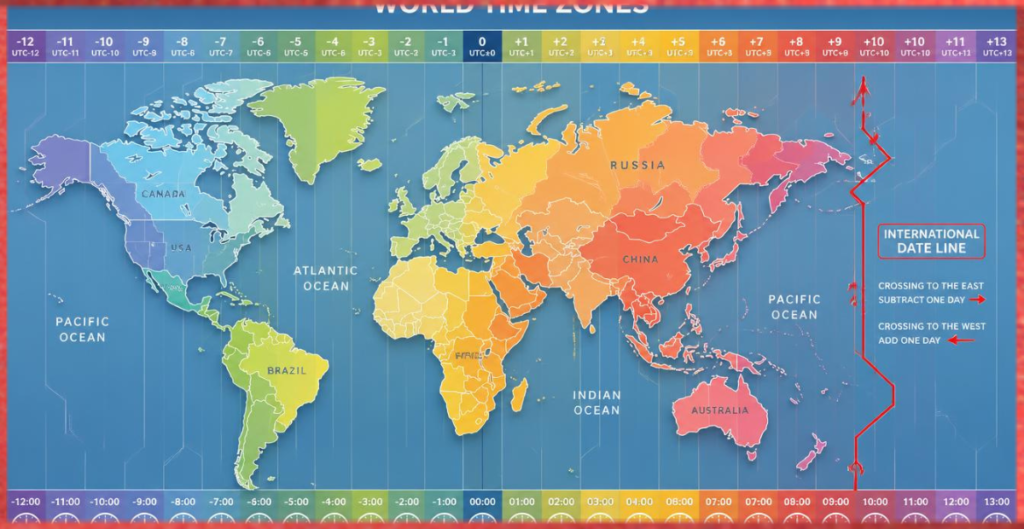
For most ordinary date calculations, the time zone won’t affect the answer. But it can matter when “today” itself is different in two locations.
Imagine someone in Pakistan checks the date while someone in California is checking it at the same moment. Because of the difference in local time zone, their calendars may show different dates.
The international date line creates another important boundary. A location can already be on the next calendar date while another location is still experiencing the previous one.
This means calendar date worldwide isn’t always identical at the same instant.
For a simple global date calculation, the safest approach is to identify the starting location, establish the local time zone, determine the correct starting date, and then perform the calculation.
The good news is that once the starting calendar date is fixed, adding 140 calendar days is still straightforward.
Does the Starting Date Change the Result?
Absolutely.
There is a difference between calculating 20 weeks from today and calculating 20 weeks from a specific date.
If today is August 13, 2026, the result is December 31, 2026.
But if your starting date is September 1, 2026, the result will be a different date. The rule remains the same; only the date input changes.
This is why a 20 weeks date calculator usually asks you to provide a starting date when you aren’t simply calculating from today.
The formula never changes:
Specific starting date + 140 days = future date
Simple? Yes. Foolproof when done manually at 2 a.m. while half asleep? Maybe not.
Common Searches About 20 Weeks From Today
People phrase the same question in many different ways. You might search:
- what date will it be 20 weeks from today
- what day will it be 20 weeks from today
- how to calculate 20 weeks from today
- what is the date 20 weeks from today
- 20 weeks into the future
- 20 weeks future date
- calculate 20 weeks from today
- 20 weeks from today calculator
- 140 days from today
- how long is 20 weeks in months
- what month is 20 weeks from today
- how to find a date 20 weeks from now
Although the wording changes, the calculation behind them is basically identical.
For the current date used in this article, the answer remains:
20 weeks from Thursday, August 13, 2026, is Thursday, December 31, 2026.
How to Make a Future Date Useful
Knowing an exact future date is only the beginning. The real benefit comes from deciding what that date means to you.
If it’s a pregnancy milestone, write down what you hope to remember about this period.
If it’s a project deadline, divide the work into smaller milestones.
If it’s an exam, create a revision calendar.
If it’s a wedding, map out deposits, invitations, travel, clothing, and final arrangements.
If it’s a fitness goal, set weekly targets rather than waiting until the final week.
If it’s a savings goal, decide how much you need to put aside each week.
In other words, turn a future date calculation into an actual plan.
A date sitting alone on a calendar is just a number. A date connected to intention becomes a destination.
A Quick Reference Table
| Calculation | Result |
|---|---|
| 1 week | 7 days |
| 20 weeks | 140 days |
| 20 weeks from August 13, 2026 | December 31, 2026 |
| 20 weeks in months | About 4.6 calendar months |
| 20 weeks in months, casually | About 4.5–5 months |
| 20 weeks ago | Subtract 140 days |
| 20 weeks from a specific date | Add 140 days |
Frequently Asked Question
when is 20 weeks from now
20 weeks from now is 140 days in the future. From today, August 13, 2026, it falls on December 31, 2026.
what day is 20 weeks from today
20 weeks from today will be Thursday, December 31, 2026. Because 20 weeks is a whole number of weeks, the weekday stays the same.
what is the date 20 weeks from now
The date 20 weeks from now is December 31, 2026. This is calculated by adding 140 days to August 13, 2026.
how long is 20 weeks ago
20 weeks ago means 140 days in the past. It represents the same length of time as 20 weeks into the future.
how long ago was 20 weeks ago
20 weeks ago was 140 days ago, or approximately 4.6 months ago. The exact calendar date depends on the starting date.
Read this blog https://avenzum.com/what-was-nine-months-ago-from-today/
Final Thoughts on 20 Weeks From Today
The question what date is 20 weeks from today may look like a tiny piece of calendar math, but dates often carry much more meaning than numbers suggest.
For today’s date, Thursday, August 13, 2026, the exact date 20 weeks from today is Thursday, December 31, 2026. The calculation is based on 20 weeks = 140 days, making it a simple and reliable conversion.
That date might become a project finish line, an academic checkpoint, a savings milestone, a fitness target, an event deadline, or a meaningful pregnancy marker.
Maybe it will simply be another Thursday at the end of a busy year. We don’t always know what a future date will hold, and that’s part of its strange little charm.
If you’re planning something important, don’t stop at finding the precise calendar date. Write down why the date matters, break the weeks into smaller milestones, and give yourself room for real life to happen along the way.
And if you’re counting toward a baby girl, a major goal, a wedding, a new chapter, or something you’ve been quietly hoping for, let the calendar be more than a calculator.
Let it remind you that the future isn’t only something waiting for you. It’s something you’re building, one ordinary week at a time.
If you have a favorite way of tracking future dates bor a personal milestone you’re counting down to share it. Sometimes one person’s little calendar trick becomes exactly the thing another person needed.