There is something strangely comforting about half an hour. It is long enough for a small task, a quiet cup of tea, a quick workout, or even a little daydream by the window, yet short enough to feel wonderfully manageable.
When a baby girl enters a family, people often discover that time suddenly feels different too minutes become memories, and even an ordinary half-hour can seem precious.
But before we wander too far into sentimental territory, sometimes you simply need to know the answer to one practical question: what time is 30 minutes from now?
A 30 Minute Calculator makes that answer almost instant. You enter or use the current local time, add half an hour, and you get the exact time in the future.
No complicated formula, no staring at a wall clock like it owes you money. Whether you are planning a meeting, setting an oven timer, taking a power nap, or wondering when your lunch break ends, adding 30 minutes is one of the simplest forms of time calculation.
| Topic | Quick Description |
|---|---|
| 30 Minutes From Now | Find the exact time that will occur 30 minutes after the current time. |
| 30 Minute Calculator | A simple calculator for adding 30 minutes to any starting time. |
| What Time Is 30 Minutes From Now? | Shows the future clock time after adding 30 minutes to the present time. |
| Add 30 Minutes | Move the starting time forward by exactly half an hour. |
| 30 Minutes in Hours | 30 minutes is equal to 0.5 hours. |
| 30-Minute Time Difference | Represents a half-hour interval between two times. |
| Time Calculation | Add minutes to a starting time to determine the resulting clock time. |
| Half an Hour From Now | Another common way to describe 30 minutes from the current time. |
What Time Is 30 Minutes From Now?
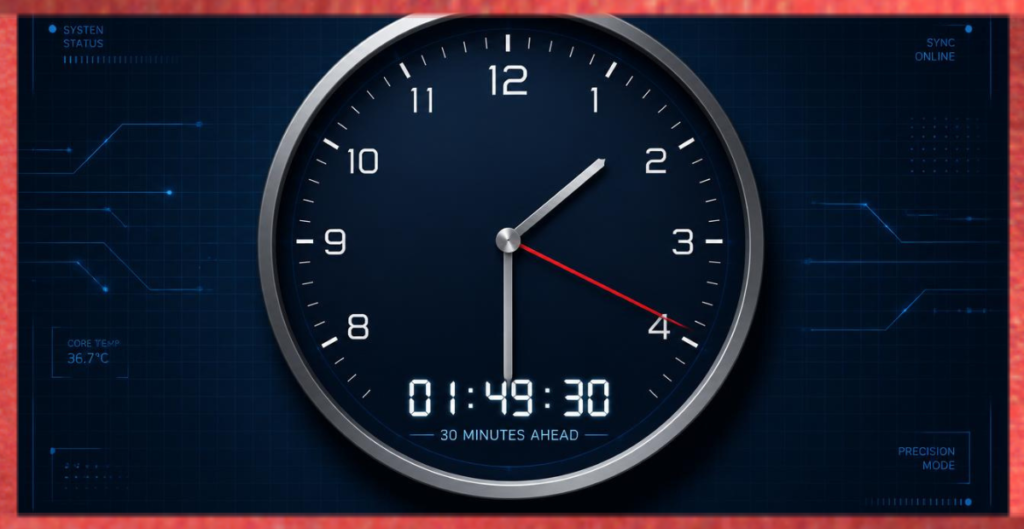
If the current time is 8:11 AM, then 30 minutes from now is 8:41 AM. Easy enough, right? But clocks have a sneaky little habit of crossing into a new hour, and thats where people sometimes pause for a second.
For example, if the current time is 8:45 AM, adding 30 minutes gives 9:15 AM. The first 15 minutes take you to 9:00, and the remaining 15 minutes land at 9:15. This is called an hour rollover, and it is the only part that can make a simple calculation feel slightly less simple.
The same idea works whether you use an AM/PM display or a 24-hour clock. If it is 11:45 AM, 30 minutes later is 12:15 PM. In military time, 11:45 becomes 12:15. Nothing mysterious happened; the clock simply moved forward.
How a 30 Minute Calculator Works
A 30 minute calculator follows one basic instruction: take the starting time and add 30 minutes. It doesn’t need to understand your schedule, your coffee order, or why you suddenly remembered an appointment from three weeks ago. It just performs the time calculation.
Suppose your starting time is 2:20 PM:
- Starting time: 2:20 PM
- Added time: 30 minutes
- Future time: 2:50 PM
Now try 2:45 PM:
- Starting time: 2:45 PM
- Added time: 30 minutes
- Future time: 3:15 PM
That second example demonstrates why checking the hour boundary matters. A minute calculator is particularly useful when you need to repeat these calculations throughout the day instead of doing them manually.
30 Minutes From Now for Everyday Planning
Life is full of tiny deadlines. You might have 30 minutes before leaving home, 30 minutes until a meeting, or exactly 30 minutes before dinner needs to come out of the oven. These little time intervals may look insignificant, but together they shape a surprisingly large part of a daily schedule.
For parents, students, office workers, cooks, athletes, and anyone who has ever said “I’ll just take a quick break,” knowing the future time can make planning much easier.
A 30-minute interval can be used for:
- A focused work session
- A 30-minute lunch break
- A short power nap
- A workout
- Cooking or baking
- Reviewing notes
- Preparing for an appointment
- A commute buffer
- A quick household task
Thirty minutes is basically the Swiss Army knife of time. It fits into many situations without demanding too much from your day.
Manual Calculation: How to Add 30 Minutes
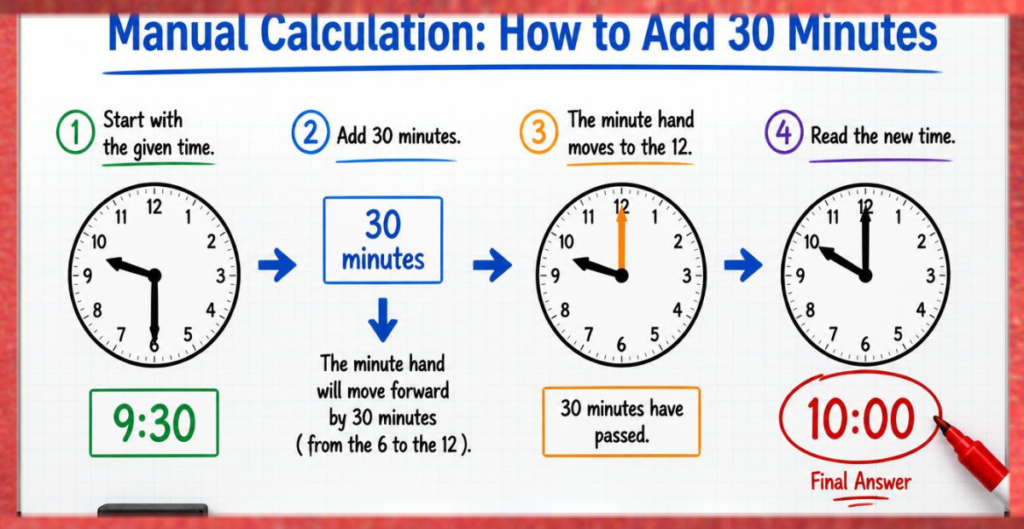
You don’t always need an online time calculator. If you know the starting time, you can perform the calculation yourself.
Start by looking at the minutes. If adding 30 keeps the minutes below 60, simply increase the minute value.
For example:
4:10 PM + 30 minutes = 4:40 PM
But if the minutes reach or exceed 60, move into the next hour.
4:45 PM + 30 minutes = 5:15 PM
One useful trick is to divide the calculation into smaller pieces. From 4:45 PM, add 15 minutes to reach 5:00 PM, then add another 15 minutes to reach 5:15 PM. This makes adding 30 minutes to a time almost impossible to mess up.
30 Minutes From Now With a 12-Hour Clock
The 12-hour clock divides the day into AM and PM. This is the format most people encounter on everyday clocks, phones, watches, and household appliances.
Adding 30 minutes is straightforward until you cross noon or midnight.
For example:
| Current Time | 30 Minutes Later |
|---|---|
| 7:10 AM | 7:40 AM |
| 8:35 AM | 9:05 AM |
| 11:45 AM | 12:15 PM |
| 1:20 PM | 1:50 PM |
| 5:40 PM | 6:10 PM |
| 11:50 PM | 12:20 AM |
The last example is especially important because the date changes after midnight. So 30 minutes from now can sometimes mean not only a different time but also a different calendar date.
30 Minutes From Now With a 24-Hour Clock
A 24-hour clock removes the AM and PM labels and represents the entire day from 00:00 through 23:59.
The same calculation works exactly the same way.
For instance:
14:15 + 30 minutes = 14:45
And:
23:45 + 30 minutes = 00:15
That final calculation crosses midnight, so the result belongs to the following day. This is why a 24-hour time calculation can be especially useful for travel, healthcare, logistics, scheduling, and international communication.
People sometimes call this format military time, although 24-hour notation is also widely used outside military settings. A clock is still a clock, thankfully.
How Many Seconds Are in 30 Minutes?
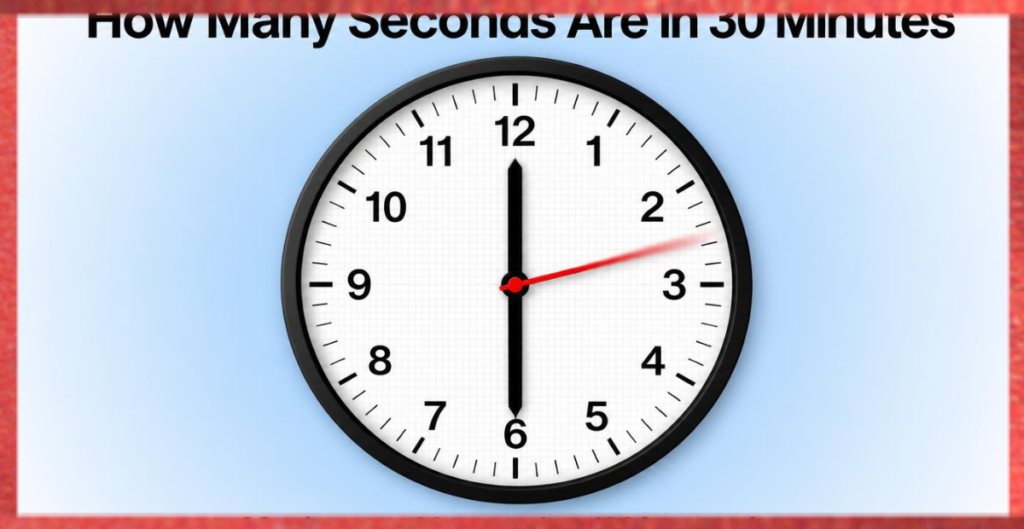
If you need a smaller unit, 30 minutes equals 1,800 seconds.
The calculation is simple:
30 minutes × 60 seconds = 1,800 seconds
So:
- 30 minutes = 1,800 seconds
- 30 minutes = 0.5 hour
- 30 minutes = 1/2 hour
- 30 minutes = a fraction of an hour
This conversion can be useful when working with software, sports training intervals, scientific measurements, timers, or other systems that count in seconds rather than minutes.
30 Minutes as Half an Hour
The phrase half an hour from now simply means 30 minutes after the current time. It sounds a little more conversational, while “30 minutes” feels more precise.
For example, if your appointment starts at 10:00 AM, half an hour later is 10:30 AM. If your oven timer starts at 6:40 PM, half an hour later is 7:10 PM.
In mathematical terms, 30 minutes is 0.5 hour, or 1/2 hour. There is no difference between these expressions—the clock doesn’t care which one you use.
30 Minutes From Now for Productivity
A surprising amount can happen in half an hour. You can answer emails, organize your desk, read several pages, write a rough outline, or simply sit quietly and figure out what the heck you are doing next.
The Pomodoro Technique traditionally uses focused work periods followed by short breaks, although many people customize the timing. A 30-minute productivity session can work well for people who find traditional work intervals either too short or too rigid.
You might use 30 minutes for:
- A focused writing session
- A deep-work session
- Email management
- Studying
- Planning tomorrow
- Organizing files
- Reading
- Brainstorming
- Reviewing a project
The important thing isn’t that every half-hour must become wildly productive. Sometimes productivity means stopping before your brain starts making suspicious noises.
Using 30 Minutes for Cooking and Baking

A 30-minute cooking timer can be surprisingly useful. Many recipes involve roasting, simmering, resting, reheating, or reducing something for roughly half an hour.
For baking, a 30-minute period might represent the expected baking time, although you should always follow the recipe rather than relying on a generic timer.
You can also use an oven timer to remind yourself when to check a dish. If you put something in the oven at 5:25 PM and need to check it after 30 minutes, your target time is 5:55 PM.
That tiny bit of planning can save dinner from becoming an accidental science experiment.
30 Minutes for Fitness and Exercise
A half-hour is also an excellent length for a manageable workout. A 30-minute workout doesn’t need to be extreme to be useful.
You could spend the time on:
- A 30-minute cardio session
- Walking
- Cycling
- Strength training
- Stretching
- Mobility exercises
- A short HIIT routine
- Warm-up and cooldown work
If your workout begins at 7:15 AM and lasts 30 minutes, you finish at 7:45 AM. That makes a 30-minute interval easy to place into a busy schedule.
Always adjust exercise intensity to your own fitness level and follow appropriate guidance when needed. Half an hour should make your day better, not turn it into a personal revenge story.
30 Minutes for a Lunch Break or Power Nap
A 30-minute break can reset your attention without swallowing half your afternoon.
For a lunch break, you might use the first few minutes to eat, a little time to step away from your screen, and the final minutes to prepare for the next task. It isn’t glamorous, but it works.
A power nap can also fit into a 30-minute window, although the actual sleep time may be shorter because you need time to settle down and wake up. Setting a timer can prevent “quick nap” from turning into “where did the afternoon go?”
30 Minutes Before a Professional Deadline

Deadlines become less frightening when broken into smaller pieces. If a professional task is due at 3:00 PM and you have 30 minutes remaining, you can treat that final period as a focused time buffer.
Instead of trying to do everything, decide what absolutely must be completed. Check the most important details first, remove obvious errors, and submit before the final seconds start staring back at you.
A 30-minute deadline is not always enough for a major project, obviously. But it can be enough for proofreading, formatting, uploading a document, sending an email, or completing a final review.
Why the Exact Time Depends on Your Current Local Time
A calculator cannot give one universal answer to “what time will it be in 30 minutes?” because the starting point is different for every person.
Someone in Pakistan, someone in London, and someone in New York may all ask the same question while receiving different clock times.
That is why a reliable calculator needs the user’s current local time or a specified time zone. This becomes particularly important for international users working across different regions.
Time zones, daylight-saving changes, and date boundaries can affect the displayed result. The basic 30-minute addition never changes, but the clock shown to the user certainly can.
30 Minutes From Now Calculator: Common Examples
Here are a few quick examples of 30 minutes from current time calculations:
| Starting Time | Result After 30 Minutes |
| 6:00 AM | 6:30 AM |
| 6:15 AM | 6:45 AM |
| 7:30 AM | 8:00 AM |
| 9:40 AM | 10:10 AM |
| 11:35 AM | 12:05 PM |
| 12:20 PM | 12:50 PM |
| 2:50 PM | 3:20 PM |
| 5:45 PM | 6:15 PM |
| 8:30 PM | 9:00 PM |
| 11:45 PM | 12:15 AM |
This small table also shows why an online time calculator can be convenient. Instead of thinking through every rollover, you simply let the calculator handle the arithmetic.
What Is the Difference Between a 30 Minute Timer and a Calculator?
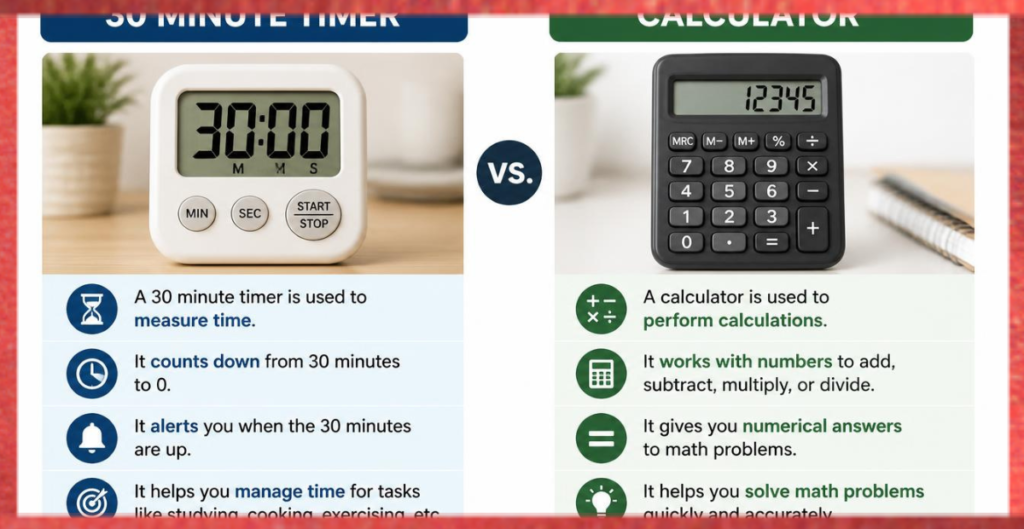
A 30-minute timer counts down from 30 minutes. A 30 minute calculator determines what clock time you will reach after adding 30 minutes.
Imagine it is 2:20 PM.
A calculator tells you:
2:20 PM + 30 minutes = 2:50 PM
A timer tells you:
30:00 29:59 29:58…
They serve related but different purposes. One identifies a future time; the other measures a time interval until it arrives.
Can 30 Minutes From Now Cross Into a New Day?
Yes, absolutely. If the current time is 11:45 PM, then 30 minutes later is 12:15 AM on the following day.
This is an important detail for appointments, travel plans, medication reminders, work schedules, and anything else where the date matters.
A proper future time calculator should account for this date transition rather than simply changing the hour and forgetting that the calendar has moved forward.
Other Useful Time Calculations
Once you understand 30 minutes, other calculations become nearly identical.
You can use the same approach for:
- 15 minutes from now
- 10 minutes from now
- 50 minutes from now
- 60 minutes from now
- 90 minutes from now
- Two hours from now
For longer periods, you may also need to account for hours, dates, or even time-zone differences. But the principle remains simple: identify the starting point, add the requested interval, and check whether you crossed an hour, midnight, or another date boundary.
Practical Ways to Use a 30-Minute Time Interval
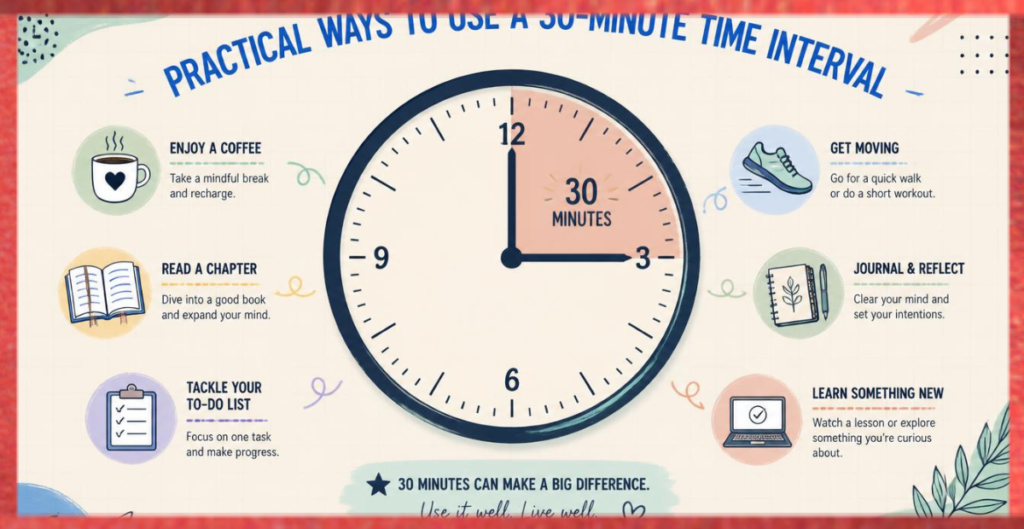
A 30-minute block can become a small container for almost anything. If your day feels scattered, giving one task a defined beginning and ending can make it feel less enormous.
Try assigning one half-hour to a single purpose:
- 30 minutes for reading
- 30 minutes for household chores
- 30 minutes for studying
- 30 minutes for exercise
- 30 minutes for meal preparation
- 30 minutes for focused work
- 30 minutes for planning
- 30 minutes without your phone
This is basic time management, but basic doesn’t mean useless. Sometimes the simplest tool is the one that actually gets used.
How to Calculate 30 Minutes From Now Without a Tool
If you don’t have access to a minutes from now calculator, use this three-step method.
Step 1: Write down the current time.
Step 2: Add 30 to the minute value.
Step 3: If the result reaches 60 or more, subtract 60 and increase the hour by one.
For example:
6:42 PM + 30 minutes
42 + 30 = 72 minutes.
72 − 60 = 12 minutes.
Increase the hour from 6 to 7.
Answer: 7:12 PM
If the hour reaches 12, remember to switch AM and PM when appropriate. And if you pass midnight, the calendar date changes too.
Why People Search “What Time Will It Be in 30 Minutes?”
People usually aren’t looking for complicated mathematics. They’re looking for a fast answer that fits into a real situation.
Someone may be waiting for a delivery, timing food, preparing for a meeting, taking a break, planning a commute, or trying to decide when to leave home.
The search phrase what time will it be in 30 minutes is therefore really a scheduling question. The person wants to turn a duration into a clock time.That’s exactly where a time calculator becomes useful.
Frequently Asked Question
what time is 30 mins from now
30 minutes from now means adding 30 minutes to the current time. For example, if it is 10:00 AM now, it will be 10:30 AM.
30 minutes from now what time will it be
Simply add 30 minutes to the current time. If the calculation passes the hour, carry the extra minutes into the next hour.
what is the time 30 minutes from now
The time 30 minutes from now is found by adding half an hour to your current time.
what time is it 30 min from now
Add 30 minutes to the present time to get the exact future time. For example, 2:15 PM becomes 2:45 PM.
30 minutes from 1255
If you mean 12:55, adding 30 minutes gives 1:25. In 12-hour format, that is 1:25 PM if 12:55 PM was the starting time.
Read this blog https://avenzum.com/nine-months-ago-from-today/
Final Thoughts on 30 Minutes From Now
Thirty minutes is a small slice of a day, but it is rarely meaningless. In one half-hour, a cake can rise, a runner can finish a workout, a student can understand a difficult chapter, a parent can enjoy a quiet moment, or a busy professional can finally finish the task that has been sitting there all morning.
Knowing 30 minutes from now is simply a matter of adding 30 minutes to the starting time. You can do it manually, use a minute calculator, or rely on a dedicated 30 minute time calculator for a quick answer.
Remember the essentials: 30 minutes equals 0.5 hour, 1/2 hour, or 1,800 seconds. Watch for an hour rollover, check AM/PM when using a 12-hour clock, and remember that midnight can move the calculation into a new date.
And perhaps that’s the nicest thing about half an hour: it doesn’t ask you to transform your whole life. It only asks what you can do with the next 30 minutes. Sometimes, thats more than enough.