There is something wonderfully simple about a pizza party. A box opens, warm slices disappear, somebody reaches for the last crust, and suddenly a quiet gathering feels like a proper celebration.
Whether you are feeding a few friends after work or a whole room during a birthday party, getting the amount right can make the meal feel effortless.
That is where a Pizza Calculator becomes handy. Instead of staring at a menu wondering, “How many pizzas do I need?” you can estimate your pizza quantity based on the guests, their ages, hunger level, and even the crust type they prefer. It takes a little guesswork out of group ordering, which is honestly a small mercy when everyone is hungry.
A good calculation also helps you avoid the two classic pizza problems: ordering so little that people start counting pizza slices, or ordering so much that your refrigerator becomes a temporary pizzeria. The goal is somewhere in that delicious middle.
| Guests | Small Pizzas | Medium Pizzas | Large Pizzas | Extra-Large Pizzas |
|---|---|---|---|---|
| 5 | 2 | 1 | 1 | 1 |
| 10 | 4 | 2 | 2 | 2 |
| 15 | 6 | 3 | 3 | 2 |
| 20 | 8 | 4 | 4 | 3 |
| 25 | 10 | 5 | 5 | 4 |
| 30 | 12 | 6 | 6 | 5 |
| 40 | 15 | 8 | 8 | 6 |
| 50 | 19 | 10 | 10 | 8 |
What Is a Pizza Calculator
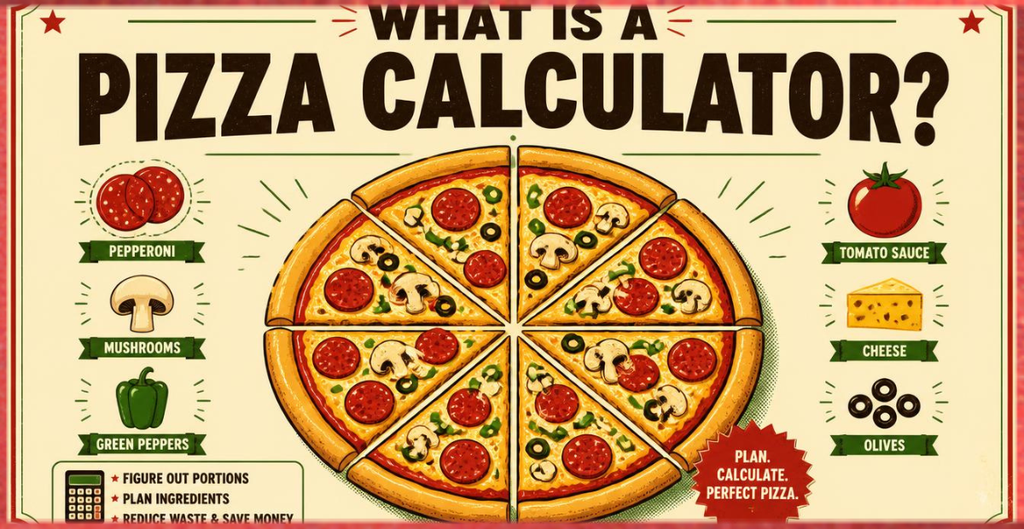
A Pizza Calculator is a simple planning tool that estimates how many pizzas to order for a group. It usually considers the number of guests, including adults, children, and sometimes teenagers, because different age groups often eat different amounts.
The calculation can also account for hunger level, meal timing, pizza size, and other foods being served. A casual lunch with salads may need less pizza than a late-night dinner where hungry guests have arrived after a long day.
In practical terms, a pizza calculator turns questions such as “how much pizza for a group?” into a clearer estimate. It is not trying to predict every person’s appetite, of course. Uncle Sam might eat two slices while your teenage cousin mysteriously eats six. That is life.
How Does a Pizza Calculator Work?
Most calculations begin with an estimated number of pizza slices per person. A common starting point is around three slices per adult and two slices per child, although actual needs can vary.
For example, imagine a group with eight adults and four children. Using three slices for each adult and two for each child gives:
8 adults × 3 slices = 24 slices
4 children × 2 slices = 8 slices
That creates an estimated total of 32 pizza slices.
The next step is converting slices into whole pizzas. This depends on the pizza size and the number of slices normally cut from each pie. A small pizza, medium pizza, large pizza, and extra-large pizza can all provide different numbers of servings.
So the basic pizza order calculation is really a two-step process: estimate the total slices, then determine how many pizzas provide those slices.
Pizza Calculator by Hunger Level
Not every gathering has the same appetite, and pretending otherwise can make your calculation a little too neat. A hunger level setting helps account for whether people are eating lightly, normally, or arriving absolutely starving.
For a relaxed afternoon gathering, a moderate estimate may be enough. If pizza is being served alongside breadsticks, salads, drinks, and desserts, guests may take fewer slices because the table has plenty of other choices.
A game day party, however, can be a different animal entirely. People snack for hours, grab another slice between plays, and somehow the box empties faster than expected.
For a hungrier group, increasing the estimated pizza portions per person is sensible. It is generally easier to deal with a few leftover slices than with twenty hungry people looking sadly into an empty box.
Pizza Calculator by Pizza Size
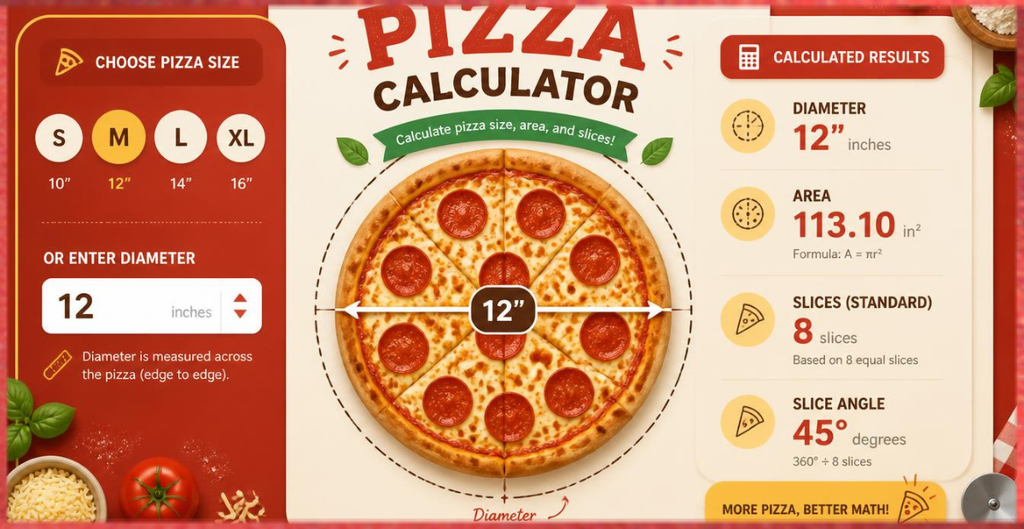
The pizza size guide matters because not every pie delivers the same number of slices. A small pizza may work well for an individual or a light eater, while larger pies are generally more practical for group pizza orders.
A typical menu may include:
- Small pizza useful for individual meals or very small groups.
- Medium pizza suitable when several people want different toppings without ordering huge pies.
- Large pizza often a practical choice for parties and family gatherings.
- Extra-large pizza useful for large volume pizza orders when many people are eating.
A 14-inch pizza is commonly treated as a large pie in many pizzerias, but actual slice counts can differ. Always check the restaurant’s serving information because one pizzeria’s “large” is another one’s very ambitious medium.
Small vs Medium vs Large Pizza
When deciding between sizes, compare the actual diameter and expected pizza servings, not just the label.A larger pizza usually provides more food per pie, which can simplify ordering pizza for a group.
However, several medium pizzas can sometimes offer more topping variety, which matters when guests have different preferences.
For example, a family gathering might choose two large pizzas with popular toppings, while a birthday party could use several medium pizzas so guests can easily select between cheese, vegetables, and meat options.
The important question isn’t simply “Which size is best?” It is “Which combination gives this particular group enough food with reasonable variety?”
Pizza Crust Type and Serving Needs
The crust type can quietly influence how filling a pizza feels. A traditional crust offers a familiar balance of bread, sauce, cheese, and toppings, while thin crust pizza can feel lighter and may encourage some people to eat an additional slice.
A deep dish pizza is another story. Its thicker construction and generous filling can make each slice considerably more substantial.
When using a pizza serving calculator, think about the style being ordered rather than assuming every slice has the same portion size. A giant deep-dish slice is not exactly the same proposition as a delicate thin-crust triangle.
Pizza Calculator for a Party
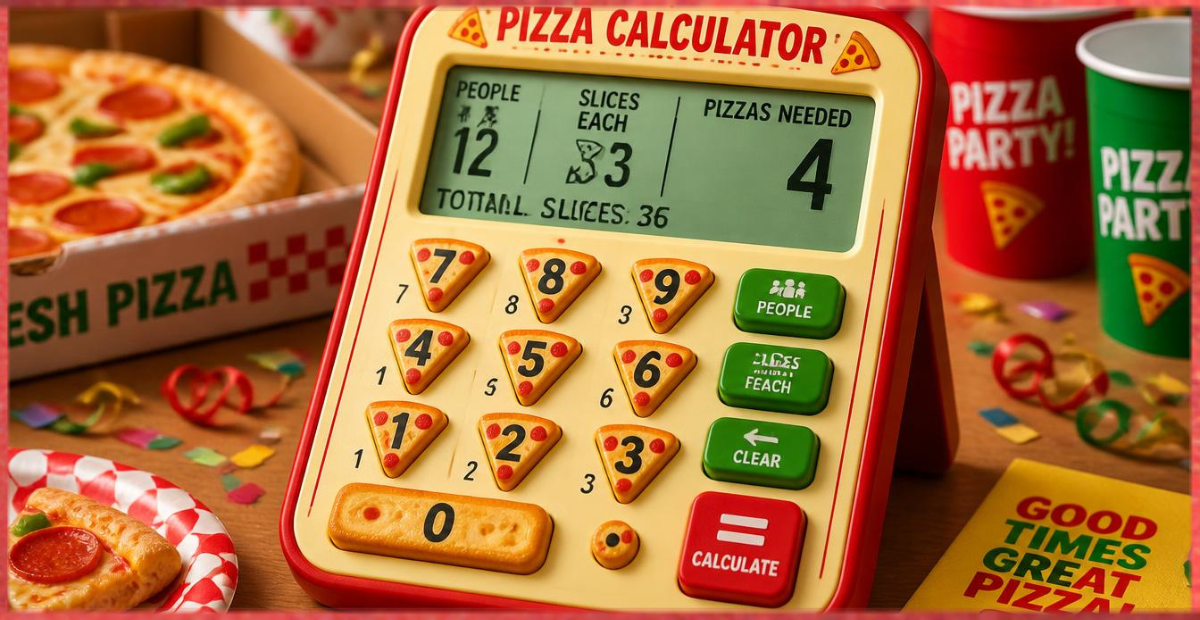
A pizza calculator for a party is especially useful when the guest count becomes large enough that mental math starts getting annoying.
For a simple starting point, consider the following rough estimates:
| Guests | Approximate Pizza Need* |
|---|---|
| 5 people | 2 large pizzas |
| 10 people | 3–4 large pizzas |
| 20 people | 6–7 large pizzas |
| 30 people | 9–10 large pizzas |
| 40 people | 12–14 large pizzas |
| 50 people | 15–17 large pizzas |
*These are planning estimates, not fixed rules. Appetite, pizza size, crust, toppings, and side dishes can change the amount needed.
For pizza for 10 people, the calculation can be fairly straightforward. For pizza for 20 people or pizza for 30 people, it becomes more important to consider age groups and side dishes.
A pizza for 40 people or pizza for 50 people order deserves a little extra planning because even a small mistake gets multiplied quickly.
How Many Slices Per Person?
The question “how many slices per person?” is one of the most useful starting points for any pizza order.
A common guideline is:
- Adults: around three slices per adult
- Children: around two slices per child
- Teenagers: often around three or more slices depending on appetite
- Light eaters: potentially fewer slices
- Hungry guests: potentially more
These numbers are simply a framework. Someone who has already eaten lunch won’t need the same amount as somebody arriving at dinner after skipping meals all day.
For that reason, a good pizza portion size estimate should leave a little flexibility.
Pizza for Adults and Children
When planning pizza for adults and children, separating the two groups can make the calculation more realistic.
Children may eat smaller portions, although older kids and teenagers can surprise you. A group of teenagers at a birthday party can turn a carefully calculated order into a collection of empty cardboard boxes before you even finish saying “Who wants dessert?”
Adults can also have very different appetites. Some may eat one or two slices while others happily go beyond three.
The point is not to create perfect mathematical certainty. It is to create a reasonable estimate that gives your party food planning a useful starting point.
Pizza Order Formula
A simple pizza order formula can be written like this:
Total slices needed = (Adults × 3) + (Children × 2)
Then:
Pizzas needed = Total slices ÷ slices per pizza
For example, if you have 12 adults and 6 children:
12 × 3 = 36 slices
6 × 2 = 12 slices
Total = 48 slices
If each pizza is cut into eight slices:
48 ÷ 8 = 6 pizzas
So six pizzas would be the basic estimate.
You can then adjust the result for hunger, leftovers, side dishes, and pizza style. This is essentially the 3/8 pizza formula idea in a practical form: three slices per adult with an eight-slice pizza as the assumed reference point.
Pizza Order Calculation for Different Events
The occasion can change how much food people actually consume. A quiet family dinner has a different rhythm from a long game day event.
For a family picnic, consider whether guests will also eat sandwiches, fruit, chips, or other foods. Pizza may be only one part of the spread.
At a birthday party, children may be distracted by games, cake, and activities, so their pizza intake can vary. Adults may eat while chatting, then return for another slice later.
During game day, guests can snack continuously, which makes a slightly larger estimate useful.
For a workplace lunch, however, a mixture of pizza, salads, drinks, and desserts may mean fewer slices per person.
Pizza for Lunch or Dinner
The timing of your meal can influence the pizza quantity. For pizza for lunch, guests may have already eaten breakfast and might choose moderate portions.
Dinner can be more substantial, particularly if pizza is the main course. A late dinner or evening party can also encourage people to eat more because the pizza becomes the central event rather than just another snack.
If the pizza is the only substantial food, use a more generous estimate. If your table looks like a small buffet, the pizza requirement may be lower.
Dietary Needs and Special Pizza Choices
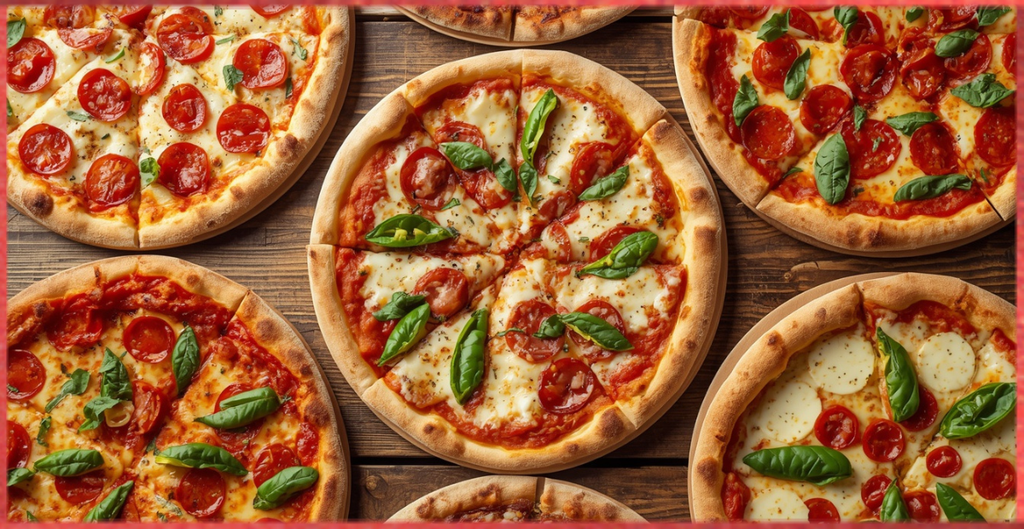
Modern pizza party planning often means accounting for dietary requirements too. Guests may need gluten-free pizza, dairy-free pizza, or specific toppings because of personal preferences or restrictions.
Instead of ordering one huge combination and hoping everybody finds something suitable, consider dividing the order into several choices.
You might include:
- Cheese pizza for simple preferences
- Meat pizza for guests who want heavier toppings
- Vegetable options for lighter eaters
- Gluten-free pizza where needed
- Dairy-free pizza where appropriate
For allergies, always confirm ingredients and preparation practices directly with the pizzeria. A label alone does not guarantee that cross-contact won’t occur.
Pizza Order for a Large Group
Large groups need more than simple arithmetic. You also have to think about timing, toppings, storage, serving, and whether the restaurant can actually prepare the order when you need it.
For large-volume pizza orders, contact the pizzeria ahead of time. Ask about estimated preparation time, available pizza deals, bulk ordering, and whether delivery fees apply.
A huge order can be easier with pizza delivery, especially if nobody wants to make several trips. But pizza pickup can sometimes provide more control over timing and may avoid certain delivery charges.
Either way, confirm the order before the event. It sounds boring, yes, but boring planning is often what saves the party.
Pizza Calculator and Side Dishes
Pizza doesn’t have to carry the entire meal on its shoulders. Side dishes can change the amount of pizza required.
If you are serving breadsticks, salads, drinks, and desserts, guests may eat fewer pizza slices. If the pizza is accompanied by only beverages, plan for more substantial portions.
A useful approach is to ask: “If the pizza disappeared, would everyone still have enough food?” If the answer is no, increase the order. Nobody wants a birthday cake to become emergency dinner.
Pizza Deals for Groups

Before placing a large pizza order, check for pizza deals for groups. Restaurants often have bundles that combine multiple pizzas and sides, which can sometimes be simpler than buying each item separately.
Look at the final price rather than just the advertised discount. Compare the number of pizzas, toppings, sides, and drinks included, and remember to account for delivery fees.
A deal is useful when it matches what your group actually needs. Buying six extra pizzas because the seventh one is “free” isn’t necessarily saving money if the freezer starts looking frightened.
Pizza Delivery vs Pickup
Choosing between pizza delivery vs pickup depends on the event and your logistics.
Delivery is convenient when you are managing guests, decorations, children, or a busy schedule. Pickup can work well when someone is already nearby and the order is ready at a specific time.
For a major party, call ahead either way. Ask how long the order will take, whether the restaurant offers special arrangements for a group pizza order, and whether the pizzas can be prepared close to your preferred serving time.
Fresh pizza has a very short window where everything seems perfect. Timing matters more than people think.
How to Avoid Running Out of Pizza
The simplest way to avoid running out of pizza is to build a small safety margin into your calculation.
If your estimate says six pizzas, consider whether seven would make sense when:
- The group includes many hungry adults.
- Pizza is the main meal.
- The event lasts several hours.
- Teenagers make up a large part of the group.
- There are few or no side dishes.
- Guests may arrive hungry after activities.
Leftovers aren’t necessarily a failure. They can become tomorrow’s lunch, which is a rather respectable ending for an overprepared pizza party.
How to Make Your Pizza Order More Personal
A useful Pizza Calculator gives you a number, but the best pizza order also reflects the people eating it.
Ask guests about favorite toppings when possible. Consider offering a mixture of familiar and adventurous choices. If someone has dietary restrictions, make their needs part of the plan from the beginning rather than treating them as an afterthought.
You can also divide the order according to appetite. Large pizzas can handle the main crowd, while a smaller specialty pizza can serve guests with different preferences.
That little bit of thought can make the gathering feel much more welcoming.
A Practical Pizza Planning Checklist
Before finalizing your order, think through these simple questions:
- How many guests are coming?
- How many are adults, children, or teenagers?
- What is the expected hunger level?
- Is pizza the main meal?
- What pizza size will you order?
- How many pizza slices does each pie provide?
- What crust type does everyone prefer?
- Are there dietary requirements?
- Will you serve breadsticks, salads, drinks, or desserts?
- Is pizza delivery or pizza pickup easier?
- Are there useful pizza deals?
- Have you checked delivery timing and delivery fees?
It takes only a few minutes, but those minutes can prevent a surprisingly chaotic dinner.
Why Pizza Calculators Are Useful
The real value of a pizza quantity calculator isn’t mathematical perfection. It is confidence.
Instead of guessing how many pizzas to order, you start with a sensible estimate. Then you adjust it based on the people, the event, and the menu.
That is especially helpful for pizza catering, office lunches, school celebrations, family gatherings, and large birthday parties. The bigger the group becomes, the more useful a structured estimate can be.
A calculator also makes group ordering easier because everyone can work from the same basic assumptions instead of five people independently shouting different numbers across the room.
Frequently Asked Question
how many pizzas for 40 people
For 40 people, plan for about 15 large pizzas, depending on appetite and side dishes.
how many pizzas for 15 people
For 15 people, around 6 large pizzas should provide enough slices for everyone.
how many pizzas for 10 people
For 10 people, order about 4 large pizzas for a comfortable serving.
how many pizzas for 50 people
For 50 people, approximately 19 large pizzas should be enough, especially for a full meal.
how many pizzas for 25 people
For 25 people, plan on around 10 large pizzas to give guests plenty to eat.
Read this blog https://avenzum.com/how-big-is-8/
Final Thoughts on Pizza Calculator Planning
A good Pizza Calculator turns one of those deceptively simple party questions into something much easier to handle. By considering guests, adults, children, hunger level, pizza size, crust type, side dishes, and the occasion, you can make a practical estimate without turning dinner into a mathematics exam.
Remember that every group is different. Three slices per adult and two slices per child are useful starting points, not sacred laws carved into a pizza stone. Adjust the number when you know your guests have bigger appetites or when plenty of other food will be served.
Most importantly, plan for people rather than numbers. Pizza is rarely just food at a gathering; it is the excuse to sit together, talk too loudly, laugh at something nobody expected, and reach across the table for one more slice.
So whether you are planning pizza for 10 people, pizza for 20 people, or a much larger celebration, estimate carefully, order confidently, and leave just enough room for that beautiful possibility of leftovers.