Time has a funny little way of slipping past us. One moment you’re checking the clock at breakfast, and suddenly you’re wondering, “Wait, what time was it 6 hours ago?” It sounds like a tiny calculation, but when you’re trying to remember when something happened, those six hours can matter quite a lot.
Maybe you’re checking when you sent an important message, trying to work out when a shift started, remembering when you went to sleep, or simply curious about the 6 hours ago from now time.
Whatever the reason, the answer can be found with one simple idea: take the current time and move backward by six hours.The good news is that 6 hours is easy to subtract.
You don’t need complicated mathematics, honestly. A clock, a phone, or a simple time calculator can do it almost instantly, though knowing the manual method is still handy when your device is nowhere nearby.
| Keyword | Type |
|---|---|
| what time was it 6 hours ago | Main Keyword |
| 6 hours ago from now | Secondary |
| what time was 6 hours ago | Secondary |
| what time was six hours ago | Secondary |
| 6 hours ago time | Secondary |
| what time was it 6 hrs ago | Secondary |
What Time Was It 6 Hours Ago From Now?
To find what time was it 6 hours ago from now, subtract six hours from your current time. The minutes normally stay the same unless the calculation crosses midnight, in which case the calendar day changes too.
For example, if the current time is 12:00 PM, then six hours earlier was 6:00 AM. If the clock says 8:30 PM now, six hours earlier was 2:30 PM. Pretty simple stuff, but the date can become important when you travel backward past midnight.
The basic formula is:
Time 6 hours ago = Current time − 6 hours
So if your clock shows 10:15 AM, the answer is 4:15 AM. If it shows 4:15 PM, the answer becomes 10:15 AM. The time difference is exactly six hours in both cases.
How to Calculate 6 Hours Ago
The easiest way to calculate six hours earlier is to count backward hour by hour. Start with the current time, move back one hour, then continue until you have moved six hours.
For instance, suppose your local time is 3:00 PM. Moving backward gives 2:00 PM, 1:00 PM, 12:00 PM, 11:00 AM, 10:00 AM, and finally 9:00 AM. So what time was 6 hours ago? It was 9:00 AM.
You can also think of 6 hours = 360 minutes. If you prefer seconds, six hours equals 21,600 seconds, although nobody really wants to subtract 21,600 seconds by hand just to answer a clock question. Hours are much friendlier here.
Simple Examples of Time Subtraction
Here are a few examples that make time subtraction easier to understand:
- 6:00 PM → 12:00 PM
- 9:30 AM → 3:30 AM
- 10:00 AM → 4:00 AM
- 2:00 PM → 8:00 AM
- 11:45 PM → 5:45 PM
- 5:20 AM → 11:20 PM on the previous day
- 1:10 AM → 7:10 PM on the previous day
Notice that the minutes remain unchanged. The main job is simply hour subtraction. When the calculation crosses midnight, however, you need to remember that the answer belongs to the previous day, which is where people sometimes get tripped up a little.
What Time Was It Six Hours Ago in AM and PM?
When using the 12-hour format, AM and PM can make a backward calculation slightly confusing. The trick is to focus on the number of hours rather than the label first, then adjust AM or PM when needed.
Suppose the current time is 2:00 PM. Subtract six hours and you get 8:00 AM. In another example, if it is 9:00 AM, subtracting six hours gives 3:00 AM.
Now consider 4:00 AM. Six hours earlier is 10:00 PM on the previous day. The answer isn’t 10:00 AM, because that would actually be only six hours after 4:00 AM. Little AM/PM details like this can change the whole answer, so it pays to check twice.
What Time Was It 6 Hours Ago If It Is 10 AM?
If the current time is 10:00 AM, then six hours ago was 4:00 AM. This is a straightforward AM/PM time calculation because the subtraction stays within the morning hours.
What Time Was It 6 Hours Ago If It Is 2 PM?
If it is 2:00 PM now, six hours ago was 8:00 AM. The calculation crosses from PM into AM, but it does not cross midnight, so the date remains the same.
What Time Was It 6 Hours Ago in My Timezone?
The answer depends on your timezone and your current clock time. Six hours is always six hours, but the actual clock reading depends on where you are and what your current local time is.
For example, someone in one country might currently see 6:00 PM while another person sees 1:00 PM because of a time zone difference. Six hours earlier, the first person would have experienced noon, while the second person would have experienced 7:00 AM.
This is why a reliable local time calculation should use the time zone associated with the person asking. A phone usually handles this automatically, but websites and calculators may need a selected location or timezone.
Using a 6 Hour Time Calculator
A 6 hour time calculator makes the process nearly effortless. You enter the current time, select six hours as the amount to subtract, and the tool provides the earlier time.
This is particularly useful when you need an exact time 6 hours ago and don’t want to make a mistake with AM, PM, or a date change. A good calculator can perform the automatic time calculation in seconds.
For example, if the input is 7:25 PM, the calculator subtracts six hours and returns 1:25 PM. If the input is 3:25 AM, the result becomes 9:25 PM on the previous day.
A useful hours ago calculator is especially convenient when you’re working with unusual times such as 12:17 AM or 11:53 PM. Those are the moments when mental arithmetic suddenly decides to become unnecessarily dramatic.
What Happens When 6 Hours Ago Crosses Midnight?
Crossing midnight is the most important thing to watch for when calculating a past time. If you subtract six hours and move before 12:00 AM, the result belongs to the previous calendar date.
Imagine the current time is 3:00 AM on Tuesday. Six hours earlier was 9:00 PM on Monday. The clock time is easy, but the date change matters because Monday and Tuesday are different days.
Another example is 2:30 AM on August 11. Six hours earlier was 8:30 PM on August 10. The time moved backward six hours, but the date moved backward one day too.
So whenever you calculate 6 hours ago, ask yourself two things: what is the earlier clock time, and did the calculation pass midnight?
What Is 6 Hours Ago From Now?
People often search for what is 6 hours ago because they want a quick answer based on the exact moment they are asking. The calculation is dynamic, meaning the answer changes as the present moment changes.
If it is 12:13 PM right now, for example, six hours earlier would be 6:13 AM. If you check again at 1:13 PM, the answer has moved to 7:13 AM. The six-hour relationship stays fixed while the actual clock time keeps moving.
This is why searches such as 6 hours ago time, six hours ago from now, and 6 hours before now don’t have one permanent answer. The result depends on when the question is being asked.
12-Hour Format vs. 24-Hour Format
Time can be displayed in either a 12-hour time format or a 24-hour time format. Both represent the same moment, but they write the clock differently.
For example, 6:00 PM in the 12-hour format is 18:00 in the 24-hour time format. Six hours earlier, that becomes 12:00 PM or 12:00 in 24-hour notation.
The 24-hour system can be useful for calculations because there is no AM/PM label to switch. If the current time is 18:30, subtract six hours and you get 12:30. If the current time is 03:30, subtracting six hours gives 21:30 on the previous day.
Still, both systems are perfectly accurate. Your device clock may simply use whichever format you’ve selected in its settings.
Why Knowing 6 Hours Ago Can Be Useful
At first, calculating six hours backward might seem like a random little task. But there are plenty of practical reasons to know a previous time.
Work Shifts
If you’re trying to understand when a work shift began, six hours can provide a useful reference point. Someone finishing work at 6:00 PM, for example, may want to know what time it was six hours earlier.
Activity Logging
When recording activities, people sometimes remember the event but not its exact time. A time calculation can help reconstruct the timeline, especially when several events happened during the day.
Sleep Tracking
If you woke up at 7:00 AM and want to estimate what time it was six hours earlier, the answer is 1:00 AM. This can be useful when reviewing a rough sleep schedule, though actual sleep duration depends on when you fell asleep and whether you woke during the night.
Event Verification
Messages, appointments, deliveries, and other events can sometimes be compared against an earlier timestamp. Knowing the exact time calculation helps establish a simple timeline.
Scheduling
If an appointment is happening now and you need to know what was happening six hours earlier, backward calculation gives you a quick reference. It can be especially useful when planning across a busy day.
Productivity and Time Tracking
People who track focused work sessions can use hour subtraction to review what they were doing earlier. A six-hour window is long enough to cover a substantial part of a working day, which makes it a useful reference period.
How a Time Calculator Gets the Answer
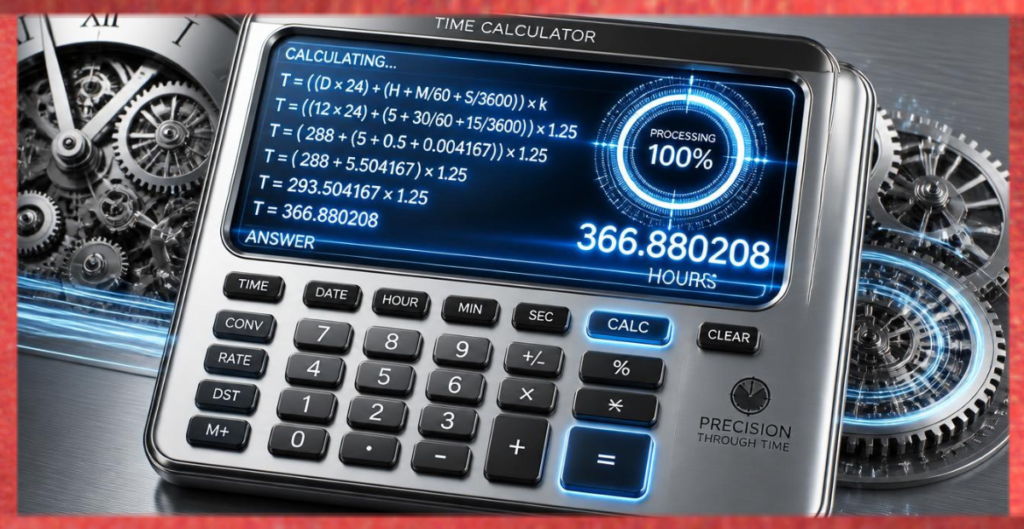
A digital time calculator usually follows a very simple process, even if the interface makes it look clever.
First, it identifies the current time or the time entered by the user. Then it subtracts six hours. If the subtraction crosses midnight, it adjusts the calendar day. Finally, it displays the result using the selected time zone, 12-hour format, or 24-hour format.
A basic calculation might look like this:
Current time: 8:40 PM
Subtract: 6 hours
Result: 2:40 PM
Another one:
Current time: 3:40 AM
Subtract: 6 hours
Result: 9:40 PM on the previous day
That last part is important. A proper calculator doesn’t just change the hour; it understands that moving backward past midnight requires a date change.
Can Your Phone Calculate 6 Hours Ago Automatically?
Yes, many phones and computers can make this kind of calculation with built-in tools or online calculators. Your system clock provides the current time, while a calculator or time utility can handle the subtraction.
However, you should remember that your device clock must be correct. If the device has the wrong timezone or an incorrect clock setting, the calculated result may also be wrong.
Modern devices generally update their clocks automatically using network or system settings. Still, when an exact historical time matters, it’s worth checking the displayed local time and timezone first, just to be safe.
Common Mistakes When Calculating 6 Hours Ago
One common mistake is subtracting the number six from the clock number without thinking about AM or PM. For example, six hours before 2:00 AM is not 8:00 AM. It is 8:00 PM on the previous day.
Another mistake is forgetting about midnight. If the answer passes midnight, the time belongs to the previous date. This matters when you’re recording events, checking timestamps, or comparing two records.
People also sometimes confuse a time difference with a date difference. Six hours ago can still be the same day, or it can be the previous day. It depends entirely on the starting time.
Finally, don’t confuse “six hours ago” with “six hours from now.” One moves backward; the other moves forward. The words are similar, but the direction is completely opposite, which is a sneaky little detail.
Quick Reference Table for 6 Hours Ago
| Current Time | 6 Hours Earlier |
|---|---|
| 6:00 AM | 12:00 AM |
| 8:00 AM | 2:00 AM |
| 10:00 AM | 4:00 AM |
| 12:00 PM | 6:00 AM |
| 2:00 PM | 8:00 AM |
| 4:00 PM | 10:00 AM |
| 6:00 PM | 12:00 PM |
| 8:00 PM | 2:00 PM |
| 10:00 PM | 4:00 PM |
| 12:00 AM | 6:00 PM, previous day |
This table gives you a fast reference, but remember that the minutes stay the same. So if it is 8:35 PM, six hours earlier is 2:35 PM, not 2:00 PM. The clock doesn’t politely round things for us, sadly.
How to Find the Exact Time 6 Hours Ago
If you need the exact time 6 hours ago, start with the precise current clock reading, including the minutes. Then subtract six hours without changing the minutes.
For example:
Current time: 11:42 AM
Six hours earlier: 5:42 AM
Or:
Current time: 2:18 AM
Six hours earlier: 8:18 PM on the previous day
For an even more precise result, use a real-time time calculator that reads the current time and applies the subtraction automatically. This avoids accidentally using an old clock reading, which can happen when you’re moving between devices or checking a calculation later.
Real-Time Calculation and Automatic Updates
A real-time calculation changes as the current clock changes. If a website uses the live clock, its answer for “six hours ago” will also update continuously.
This is different from entering a fixed time manually. If you enter 9:00 AM into a calculator, the answer will remain 3:00 AM until you change the input. A live countdown/time calculation tool, on the other hand, can use the current moment and update the result as time passes.
That feature is useful when you’re checking time repeatedly throughout the day. You don’t need to keep performing the same automatic time subtraction again and again.
Frequently Asked Questions
What time was it 6 hours ago?
Six hours ago is found by subtracting six hours from the current time. The exact answer changes depending on when you perform the calculation.
What time was 6 hours ago from now?
Take your current local time and subtract six hours. If the calculation passes midnight, the result will be on the previous day.
How many minutes are in 6 hours?
There are 360 minutes in 6 hours because 6 × 60 equals 360.
How many seconds are in 6 hours?
There are 21,600 seconds in six hours. That’s 6 × 60 × 60, though using seconds is usually overkill for a simple clock calculation.
What time was it six hours ago if it is 10 AM?
If the current time is 10:00 AM, six hours ago was 4:00 AM.
What time was it six hours ago if it is 2 PM?
If it is 2:00 PM now, six hours earlier was 8:00 AM.
Does six hours ago always mean the previous day?
No. Six hours earlier can be on the same day or the previous day. It depends on the current time and whether subtracting six hours crosses midnight.
Does the timezone affect the answer?
The six-hour difference itself does not change, but the displayed clock time depends on your timezone. Two people in different locations may see different local times while both are exactly six hours away from their own current time.
Read this blog https://avenzum.com/time-until-330-pm/
Final Thoughts on Finding 6 Hours Ago
Figuring out what time was it 6 hours ago is one of those tiny calculations that becomes surprisingly useful once you start paying attention to it.
From work shifts and sleep tracking to activity logs, delivery timing, event verification, and everyday scheduling, knowing how to move backward through Time can save a bit of confusion.
The method is simple: take the current time, subtract six hours, keep the minutes unchanged, and check whether you’ve crossed midnight. That’s the whole trick, really.
For quick mental calculations, counting backward works perfectly. For an exact time calculation, especially when the timezone or date matters, a time calculator is a safer choice.
And perhaps that’s the nicest thing about time: it keeps moving whether we’re watching it or not. Six hours can disappear quietly, then suddenly we’re looking backward and asking where they went. A simple calculation gives those hours a place on the clock again, even if only for a moment.